
Walking Aids
Crutches, walking sticks and frames, fitted to your height.
About walking aids
Walking aids are canes, crutches, walking frames and rollators. They are for people who can walk but need help with balance, or need to take some or all of the weight off a leg.
They help after an injury or an operation, such as a sprain, a broken leg or a new hip, and with longer-term conditions such as arthritis, a stroke, or weakness after an illness or its treatment. We set each aid to your height.
Below are canes, crutches, frames and rollators, then stronger aids for heavier people and aids for children. If you need a knee walker for a few weeks, you can hire one through Medi Rent.
Hire a knee walker through Medi Rent
These are examples of what we supply, not our full range. If you don’t see what you need, phone us on 011 782 7809 and we will help you find the right one. Read what happens at your first visit.
Walking sticks and canes
A cane gives a little support and helps with balance. It takes some weight off a sore hip or knee, but not all of it, so it is not the answer when a leg must carry no weight at all.
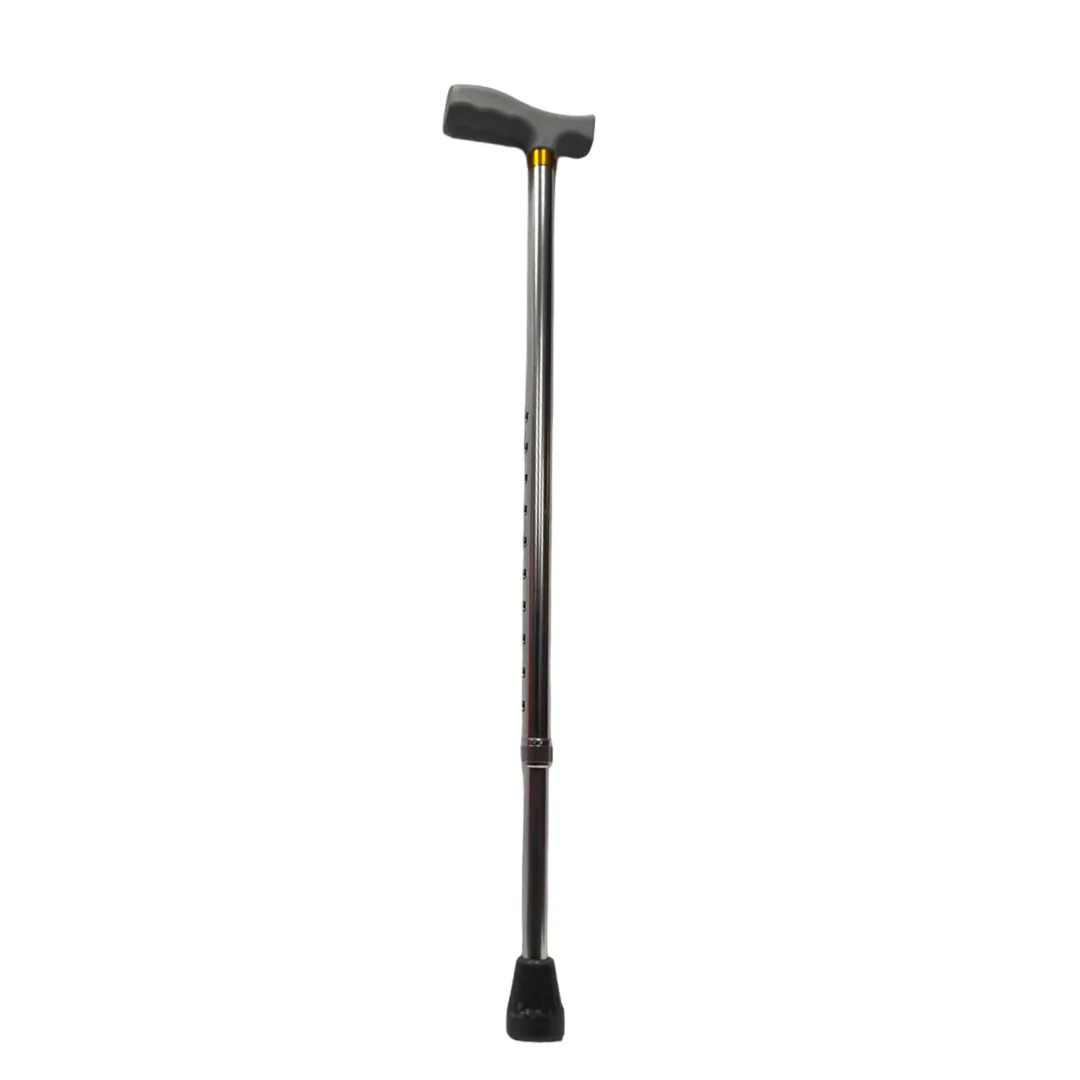
Walking cane
Suits: mild pain or unsteadiness, when both legs can still take your full weight
A single-tip cane that adjusts in height. You hold it in the hand opposite the sore leg. It is the simplest walking aid and the easiest to take with you.
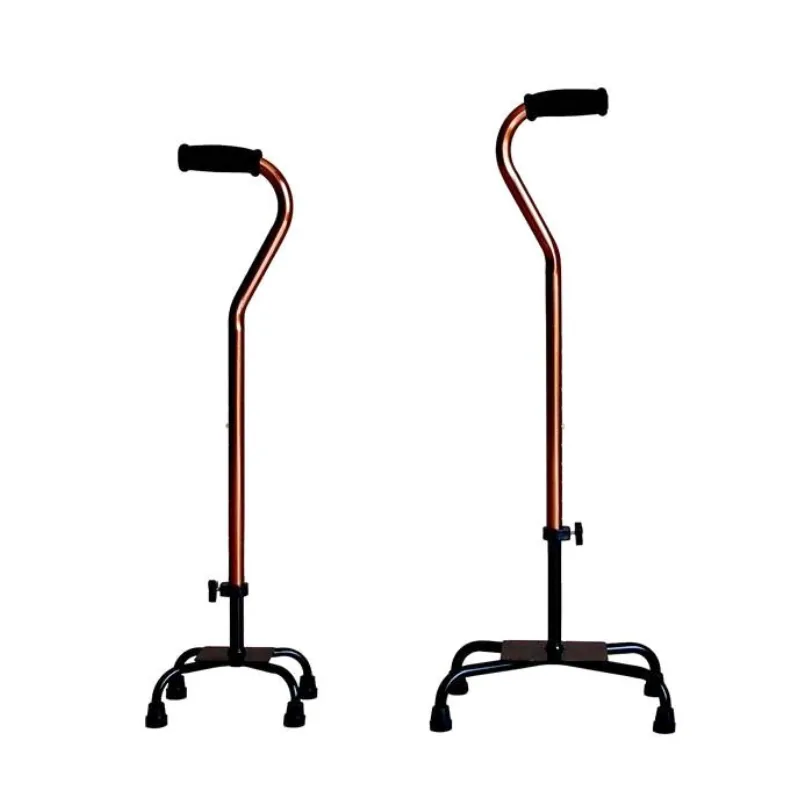
Quad cane
Suits: people who need more steadiness than a single cane gives, but not a frame
Four small feet on a base give the cane a wider footing, so it stays put when you lean on it and stands up by itself when you let go. It comes with a small or a large base.
Crutches
Crutches can take the weight off a leg completely, which a cane cannot. They need good balance and some strength in the arms and shoulders, so they suit some people better than others. Using them takes a little practice.
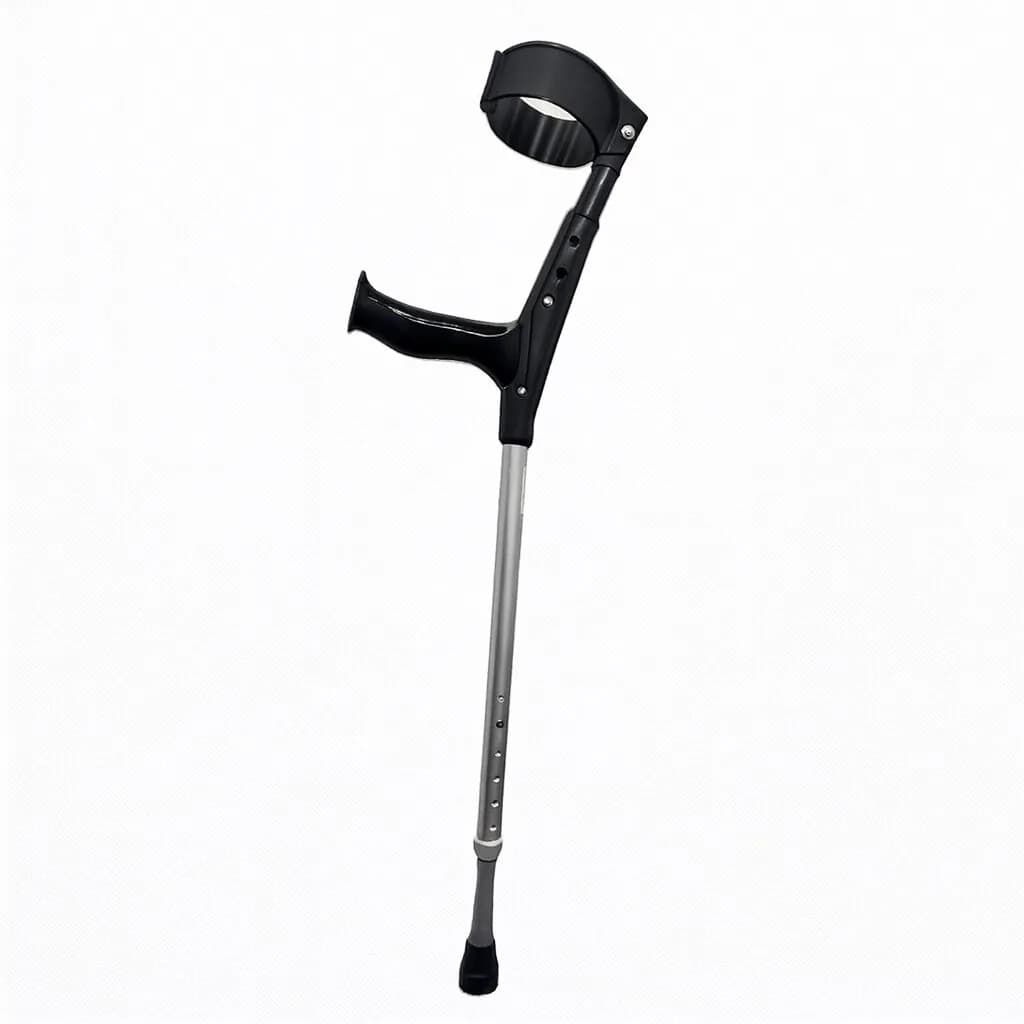
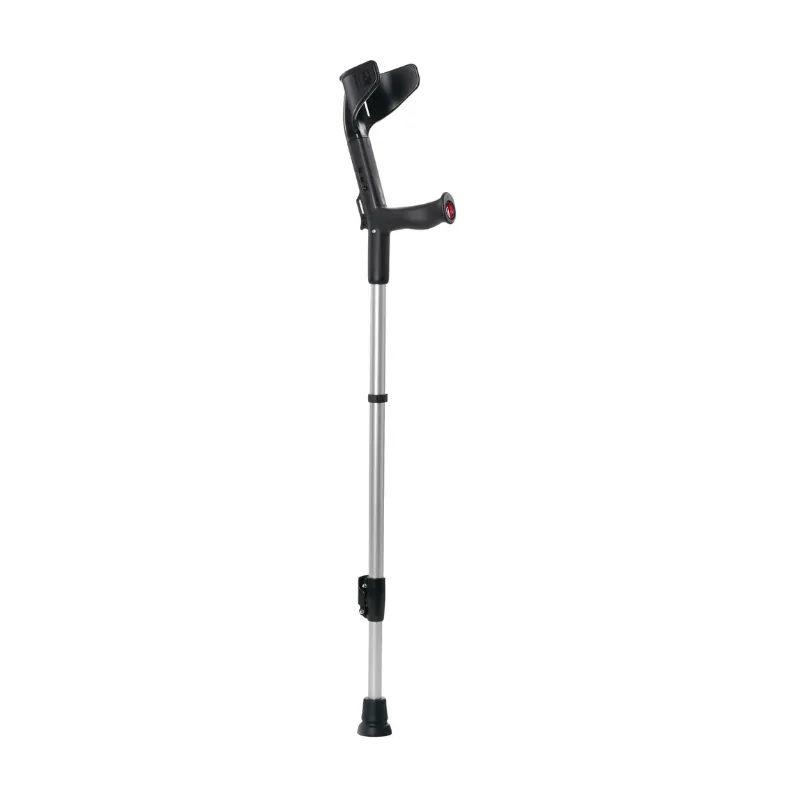
Forearm crutches
Suits: recovery after an injury or an operation, or longer-term use
Aluminium crutches with a cuff around the forearm and a shaped handgrip. The height adjusts with a push pin. There are sizes for children, teenagers and adults.
Walking frames and rollators
A frame gives the most support of any walking aid. A rollator has wheels, brakes and usually a seat, so it rolls along with you and gives you somewhere to rest. A frame without wheels is steadier; a rollator is easier over longer distances.
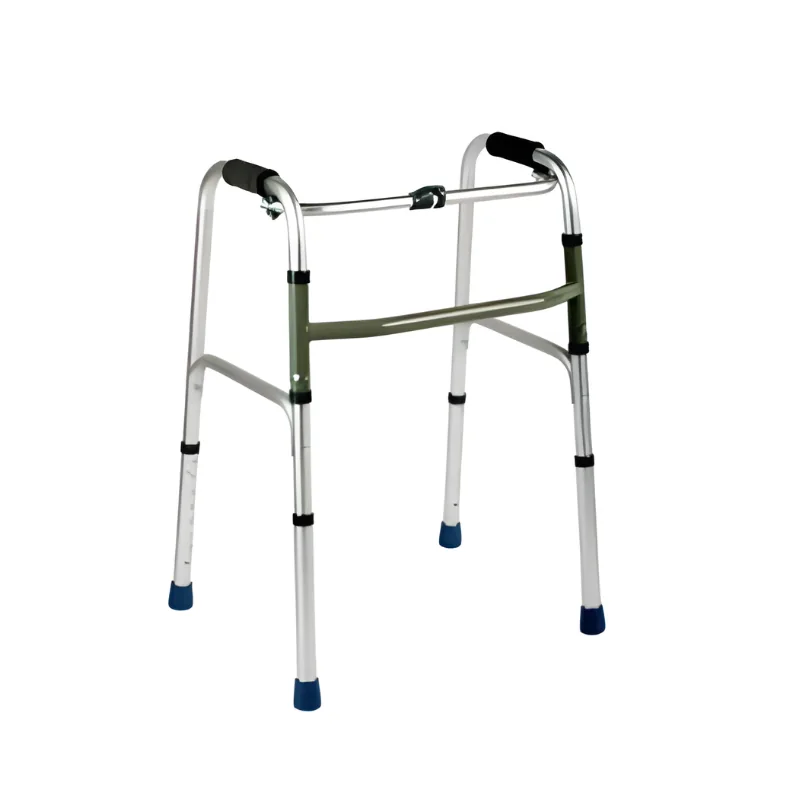
Walking frame
Suits: poor balance or weak legs, mostly indoors
A light aluminium frame with four legs that you lift and place a step ahead. It folds flat for the car.
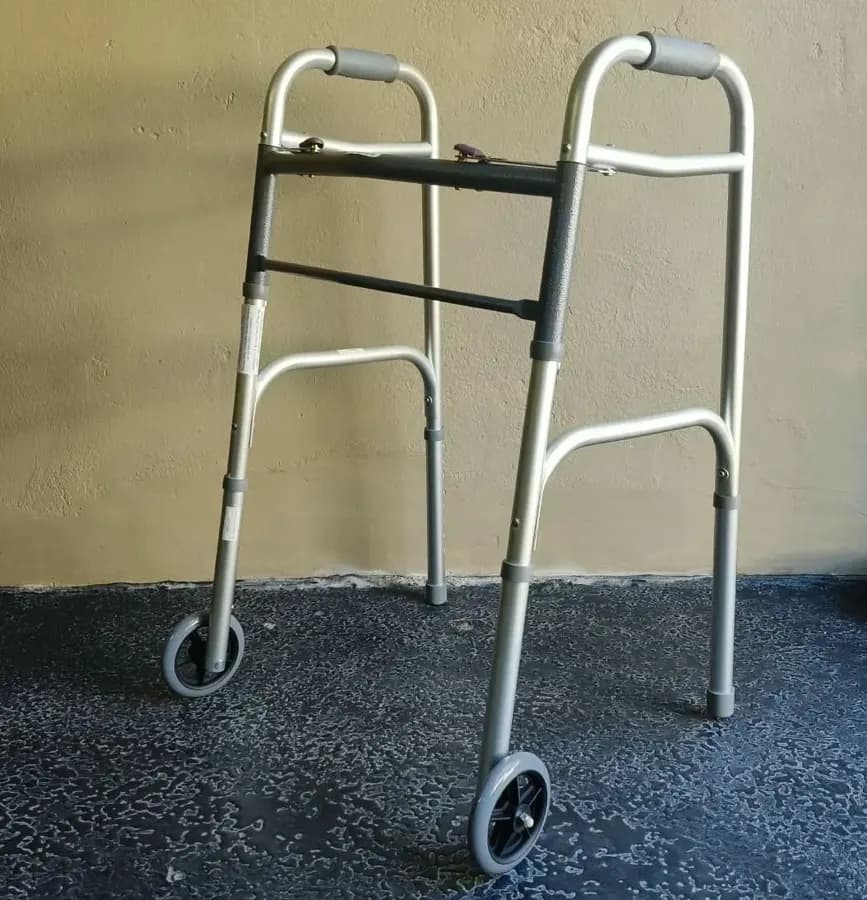
Walking frame with front wheels
Suits: people who find it hard to lift a frame
The same frame with two wheels on the front legs, so it slides forward as you walk instead of being lifted.
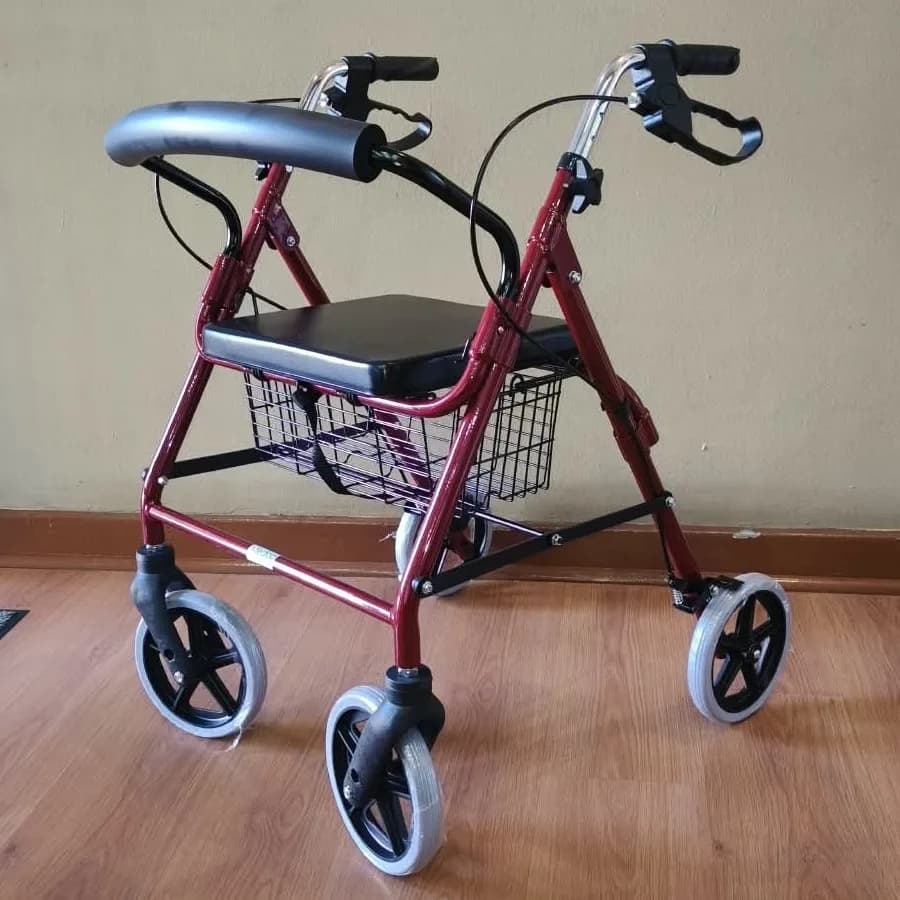
Rollator
Suits: people who walk outdoors and need somewhere to rest
A four-wheel walker with a padded seat, a basket under it, hand brakes and large wheels. It rolls along with you, the brakes hold it still when you stop, and the seat gives you somewhere to sit. It folds for the car.
Heavy-duty walking aids
Stronger aids for heavier people, with sturdier frames and wider bases. Each is rated for more weight than a standard aid: a crutch up to 150 kg, and frames, rollators and canes to well over 200 kg.
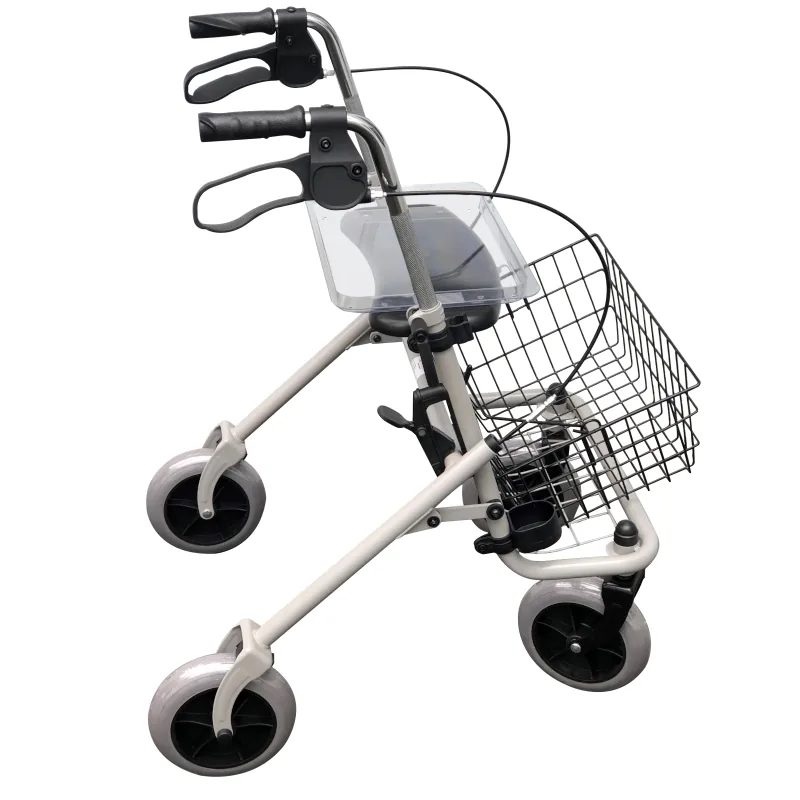
Heavy-duty rollator
Suits: heavier people who walk outdoors and need a place to rest
A wide rollator with a padded seat, a backrest that comes off, loop brakes and larger wheels for indoors and out. There is a zipped pocket under the seat.
Heavy-duty walking frame
Suits: heavier people who need the steadiness of a frame
A wider frame with a longer base for stability. It folds with a press of two paddles.
Heavy-duty canes and crutches
Suits: heavier people who need a cane or a crutch
Steel quad canes with a small or a large base, and a single-tip cane with an offset handle that puts your weight straight over the tip. The heavy-duty forearm crutch takes up to 150 kg and can be cut to the right length.
Walking aids for children
Smaller, lighter aids for children who are learning to walk or recovering from an operation. We set each one to the child’s height and adjust it as they grow.
Rollators, reverse walkers, crutches and standing frames
Suits: children learning to walk, or recovering from an operation
Should your child need a rollator, a reverse walker, crutches, a standing frame or any other walking aid, ask us and we will find the right one for them.